




What is Pichwai Painting?
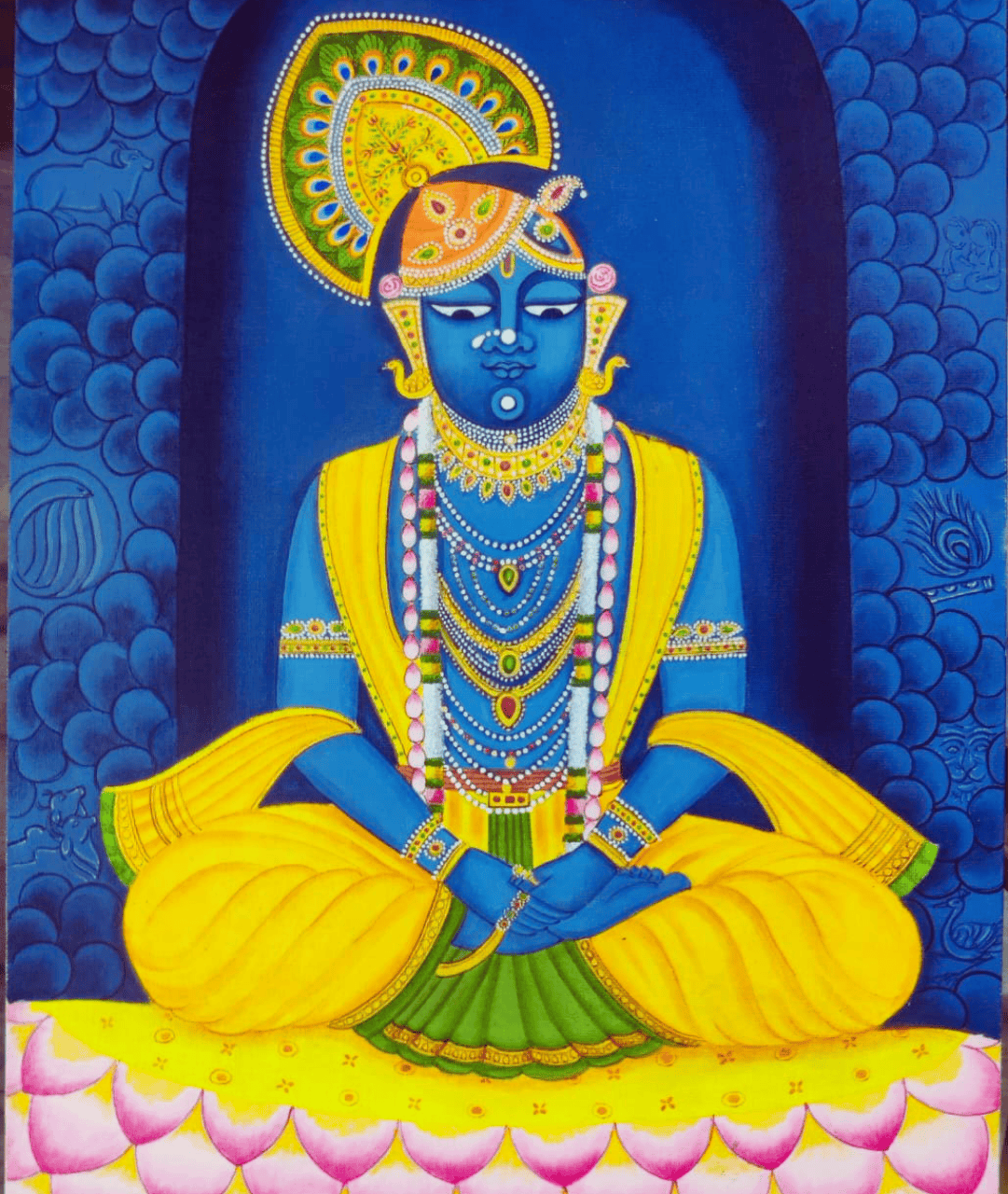
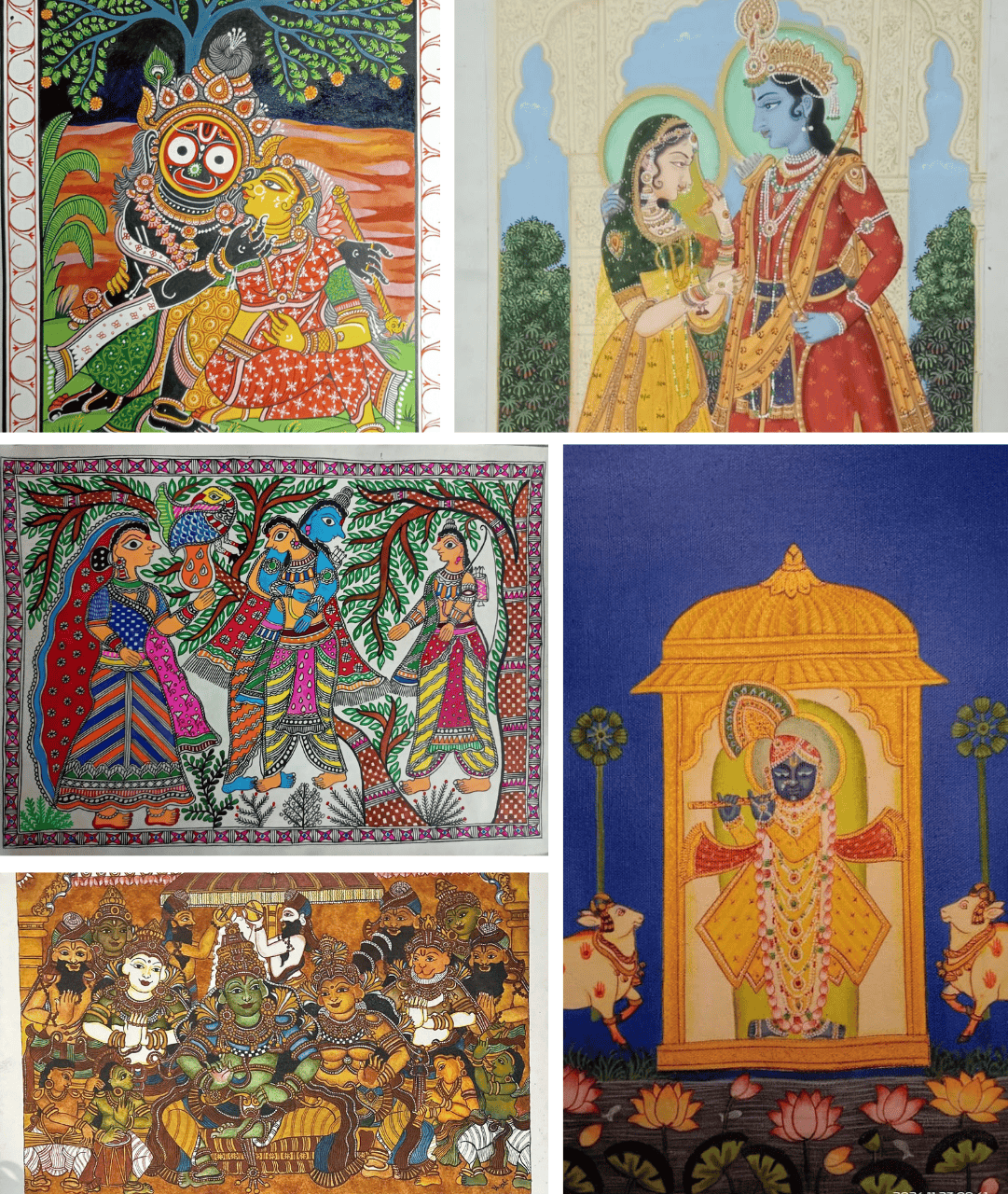
Pichwai is a traditional Indian painting style that originated over 400 years ago in Nathdwara, Rajasthan. It is a sacred art form created to decorate the walls behind the idol of Shri Nathji, a child form of Lord Krishna. Pichwai paintings depict episodes from Krishna’s life, especially his divine leelas in Vrindavan, using rich detailing, vibrant colors, and ornate compositions. Common elements include lotuses, cows, peacocks, temples, and floral patterns, with colors like gold, red, green, blue, and white creating a festive and divine effect.
How to Learn Pichwai Painting
Pichwai painting is a sacred and highly detailed art form originating in Nathdwara, Rajasthan, and is deeply associated with devotion to Shrinathji. Learning Pichwai requires patience, discipline, and an understanding of both artistic techniques and spiritual symbolism. There are two primary ways to learn this traditional art form:
1. Traditional Way of Learning Pichwai Painting:
Traditionally, Pichwai painting is passed down through generations of Chitrakar families in Nathdwara. Learning takes place under the guidance of a guru through years of observation and practice. This method focuses on discipline, fine brushwork, spiritual understanding, and the use of natural pigments. The guru–shishya tradition preserves the authenticity, symbolism, and devotional essence of this sacred art form.
2. Learning Pichwai Painting Through Online Classes:
With the evolution of digital learning, Pichwai painting can now be learned through well-structured online platforms, making this intricate art form accessible to learners worldwide. Online classes break down complex Pichwai compositions into step-by-step modules—starting from basic sketching, border designs, lotus ponds (Kamal Talai), cows, peacocks, and architectural elements, to advanced themes like Shrinathji leelas and seasonal Pichwais.
Platforms such as Catterfly Live Workshops, Courses, and Masterclasses offer beginner-friendly and professionally guided sessions, conducted by experienced artists. These online programs focus on:
- Understanding Pichwai symbolism and themes
- Brush control and fine-line techniques
- Color layering and traditional palettes
- Composition planning and detailing
- Live demonstrations with personal feedback
Online learning allows students of all ages and skill levels to explore Pichwai painting from the comfort of their homes, while still maintaining the traditional aesthetics and discipline of the art form.
Background and Origins
Pichwai painting developed in the temple town of Nathdwara, where devotees worship Shri Nathji. The word Pichwai comes from “pichh” (back) and “wai” (hanging), meaning a cloth that hangs behind the deity. These paintings were used to mark seasons, festivals, and special occasions in the temple.
Artists created different Pichwais for different times of the year, such as monsoon, Sharad Purnima, Annakut, and Janmashtami, so that the backdrop behind Shri Nathji reflected the mood of each festival.
Key Historical Development
Pichwai painting flourished under the patronage of the Vallabhacharya sect, which promoted devotion to Krishna through art and ritual. Skilled artists were employed by the Nathdwara temple to create large textile paintings that visually narrated Krishna’s divine life.
Over time, Pichwai art moved beyond temple walls and began appearing in royal courts, private collections, and later in art galleries. Today, it is practiced on paper, silk, canvas, and murals while maintaining its devotional essence.
Tradition and Practice
Traditionally, Pichwai artists used handmade brushes, cotton cloth, and natural mineral and vegetable pigments. The paintings were created with great discipline, symmetry, and devotion, as they were considered a form of worship.
The subjects mainly include Krishna as Shri Nathji, sacred cows, lotuses, gardens, peacocks, and the divine landscapes of Vrindavan and Govardhan. Every symbol carries spiritual meaning, representing love, protection, prosperity, and divine grace.
Major Styles of Pichwai Painting
Shrinathji Leela Pichwai - Depicts episodes from Krishna’s childhood and divine play.
Kamal Talai (Lotus Pond) - Features Shri Nathji surrounded by blooming lotuses, symbolizing purity and divinity.
Gau Leela (Cows of Krishna) - Shows herds of cows, emphasizing Krishna as the divine cowherd.
Sharad Purnima & Raas Leela - Portrays moonlit celebrations and divine dance scenes.
Annakut Pichwai - Shows mountains of food offerings to Krishna, symbolizing abundance and gratitude.
Learning Pichwai with Catterfly
Catterfly offers a thoughtfully designed and structured learning journey for anyone wishing to explore the traditional art of Pichwai painting. The programs are created to suit beginners as well as advanced learners, ensuring a deep understanding of both technique and cultural significance.
Live Workshops
Catterfly’s live workshops are conducted through interactive Zoom sessions, where students learn directly from experienced master Pichwai artists. These sessions focus on foundational drawing, intricate detailing, traditional color application, and overall composition. Learners benefit from real-time demonstrations, personalized corrections, and the opportunity to ask questions, making the experience immersive and engaging. Live Workshops.
Masterclasses
The masterclasses consist of professionally recorded lessons with in-depth demonstrations of Pichwai techniques. These classes allow learners to progress at their own pace while revisiting complex steps such as fine-line work, ornamentation, and layering of natural and traditional colors. The masterclasses are ideal for artists who prefer flexible learning schedules without compromising on depth and quality. Masterclasses
Structured Courses
Catterfly’s step-by-step courses are carefully curated to take learners from basic motifs, such as lotuses, cows, peacocks, and decorative borders, to elaborate compositions featuring Shri Nathji, temple architecture, and traditional Pichwai narratives. Each module builds upon the previous one, helping students develop confidence, precision, and artistic maturity. Courses
Digital Learning Support
Through Google Classroom, students receive comprehensive support materials including detailed material lists, recorded live sessions, reference images, and guided practice sheets. Personalized feedback from expert artists ensures continuous improvement, helping learners refine their skills while staying connected to the authenticity of the Pichwai tradition.
Conclusion
From temple walls in Nathdwara to homes and galleries across the world, Pichwai painting remains a powerful expression of devotion, beauty, and artistic excellence. Through platforms like Catterfly and growing global interest, this sacred art continues to thrive as a living tradition.