Themes of Sundarvan

Themes of Sundarvan


Themes of Sundarvan

Theme 1

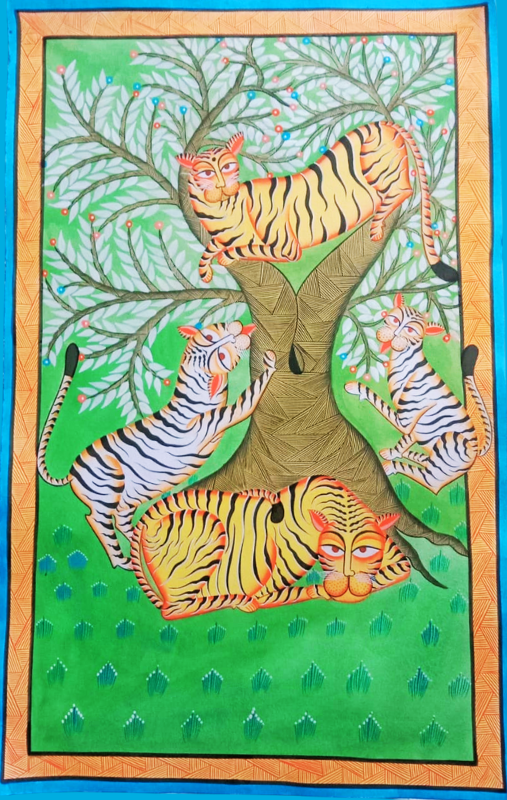
Tigers of Sundarban

About the workshop

Enjoy the learning  Bengal Pattachitra Painting "Tigers of Sundarban" form using traditional motifs and techniques with native artist Mr. Samir Chitrakar

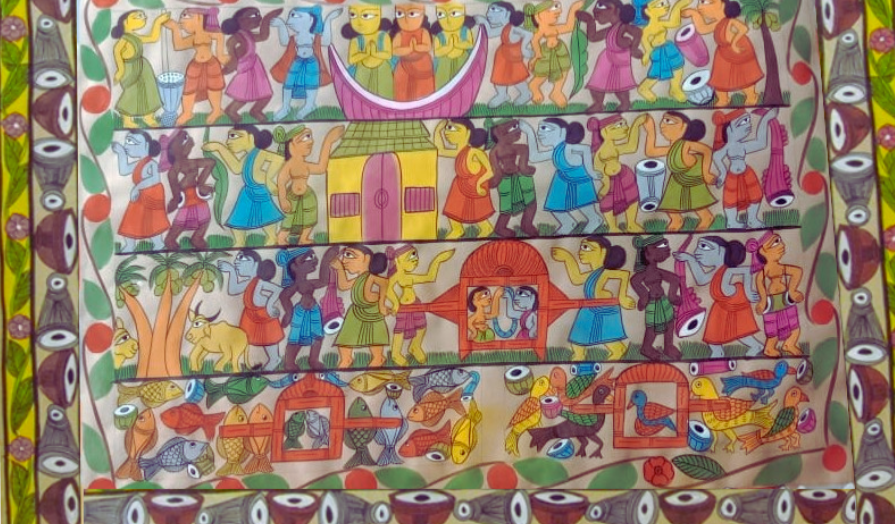
Kalighat art, or Bengal Pattachitr, originating from the Kalighat region of Kolkata (formerly Calcutta) in West Bengal, India, is a style of Indian folk art characterized by its vibrant colors, bold lines, and themes often drawn from mythology, religion, and contemporary social issues. While Adam and Eve, as figures from Christian theology, are not typically featured in traditional Kalighat art, artists in this style often adapt their subjects to reflect broader cultural and religious themes.

Tigers of Sundarban: The "Tigers of Sundervan in Bengal Pattachitra" painting sounds like a stunning tribute to the rich natural and cultural heritage of the Sundarbans. By blending the artistic style of Bengal Pattachitra with the vibrant life of the Sundarbans, the artwork appears to capture the essence of this unique ecosystem. while the portrayal of the "Tree of Life" might symbolize the deep-rooted connection between nature and all living beings in this habitat.
By celebrating the region's biodiversity and cultural significance, this artwork serves as both a visual feast and a call to action for preserving the Sundarbans' fragile ecosystem.

In this 1-week workshop, create your masterpiece, learning the techniques and history of this beautiful art form. You can attend live Zoom sessions where you interact with the master artist and other participants, learning not only the art form in depth but also more about the culture of the region. A structured classroom with step-wise instructions. Pictures and recorded videos will be available after the session on Google Classroom.

This is a great opportunity to learn the motifs, techniques, and history of this ancient art form. Sign up for the workshop today!


Learning Objectives & Modules

  • Understand the significance of Royal Bengal Tigers and their family life in the Sunderban National Park through Santhal art.
  • Learn about conservation efforts by connecting the story of the tigress Sunderi and tiger relocation initiatives in India.
  • Explore the cultural style, symbolism, and storytelling techniques of Santhal painting.

Module Details:
Module 1: How to sketch
Module 2: How to do  base color
Module 3 : How to do outlining and background coloring
Module 4 : Adding detailing with black
Module 5: Giving more detailing on the elements of the painting
Module 6: Completing the outlines and adding detailing and final touch-ups to the painting

Materials Needed

Material Needed:
  • Paper/Canvas - A3 Size Sheet
  • Pencil, Scale, Eraser
  • Micron Pen/ Fine Tip Markers
  • All Acrylic Colors or Watercolors (Artist Will Use Natural Colors)  Acrylic shades- White, Black, Cadmium Yellow, Permanent Orange, Scarlet Lake, Sap Green, Burnt Sienna, Permanent Blue Light, Golden yellow, Golden orange, Cobalt blue
  • Round Brush 0, 2, 4, 8
  • Mixing Palette
  • Bowl of Water, Rough Cloth

Theme 2

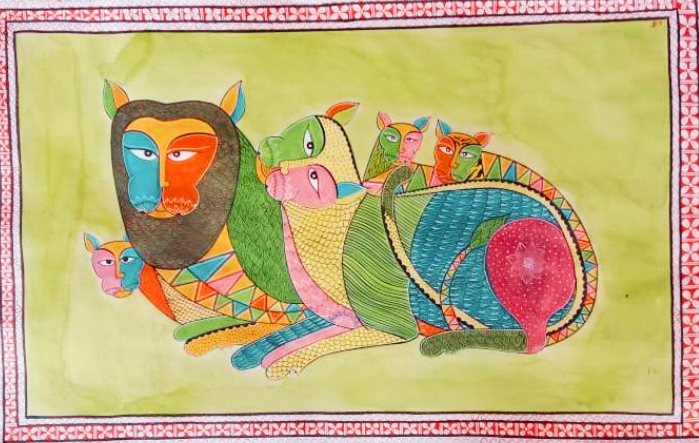
Sunderban-Sunderi

About the workshop

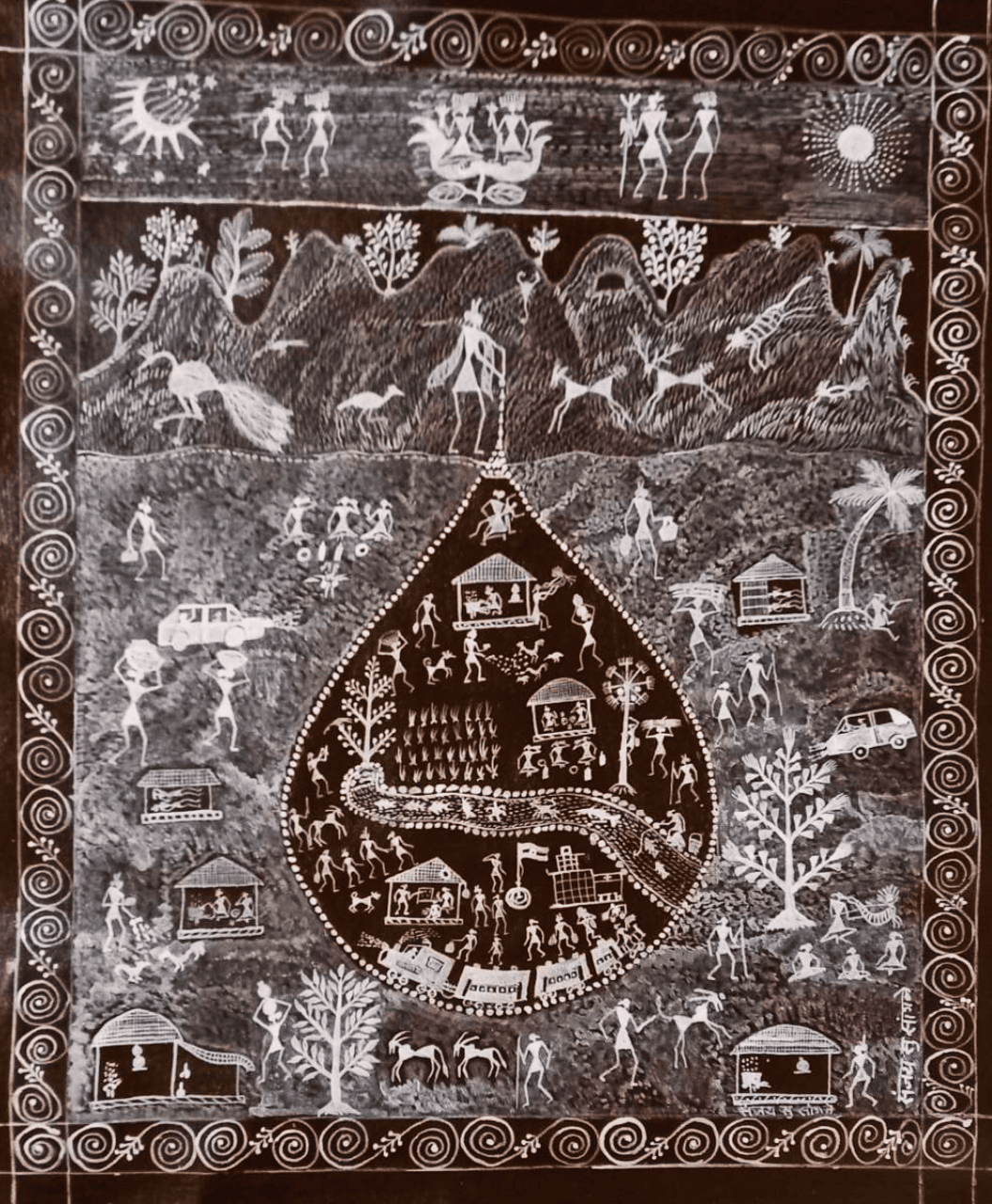
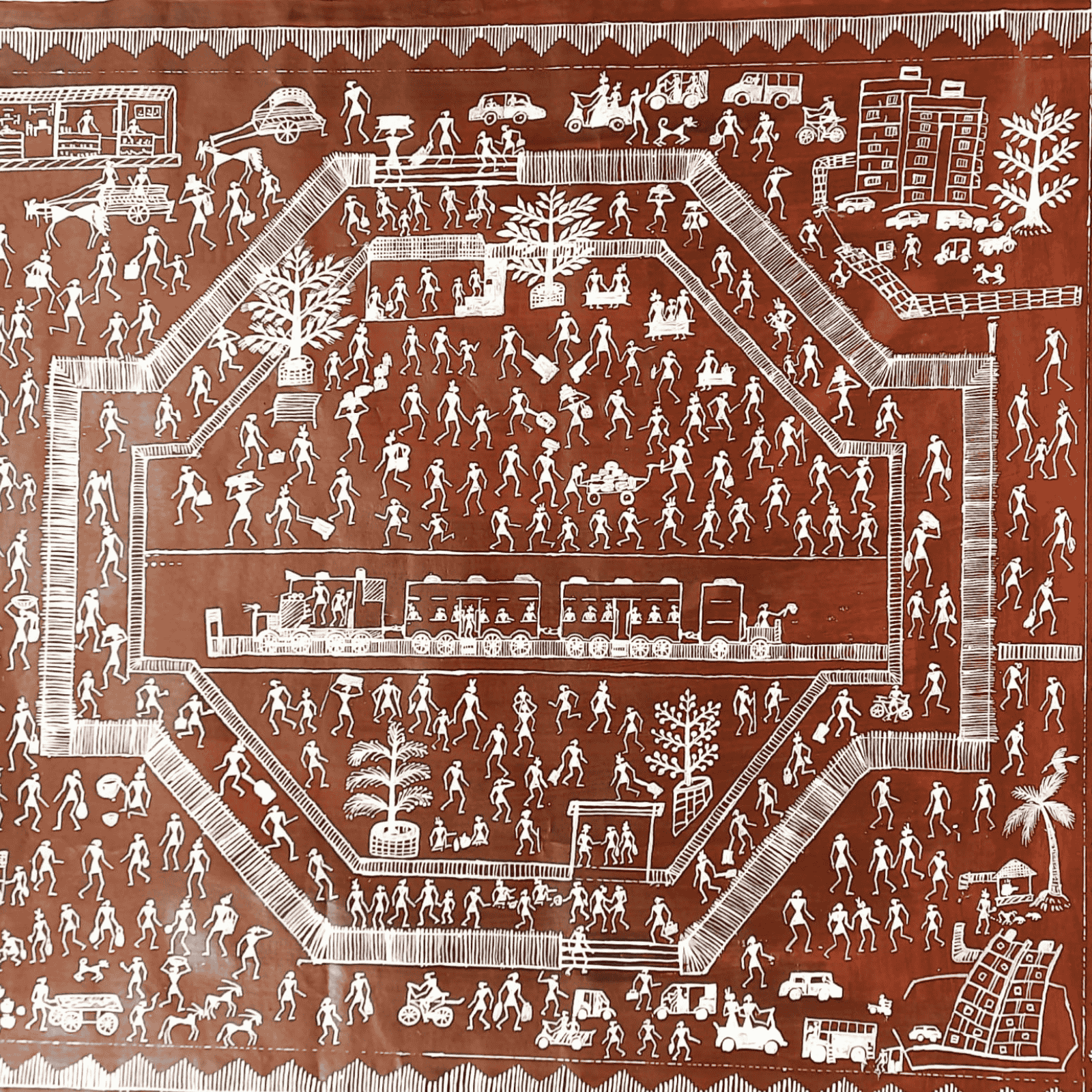
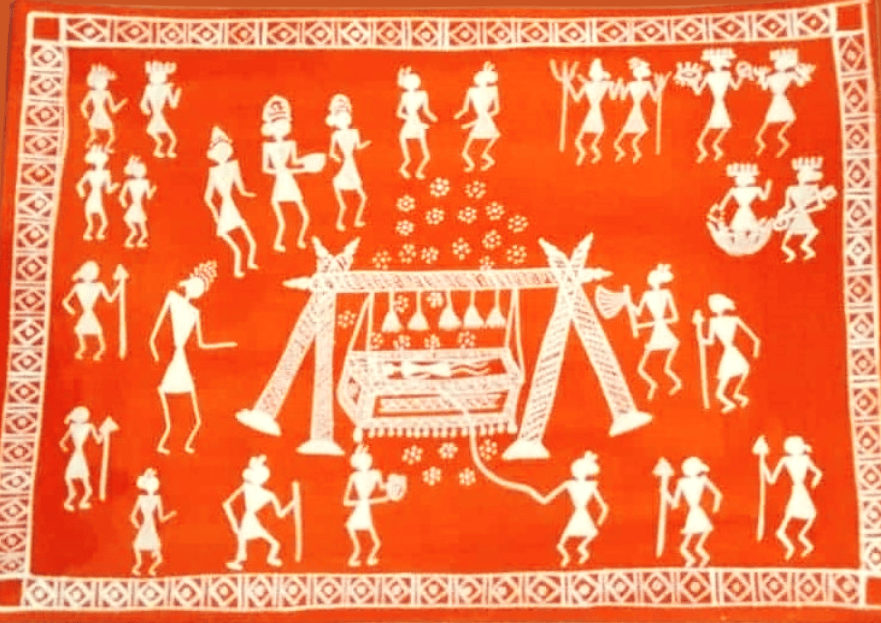
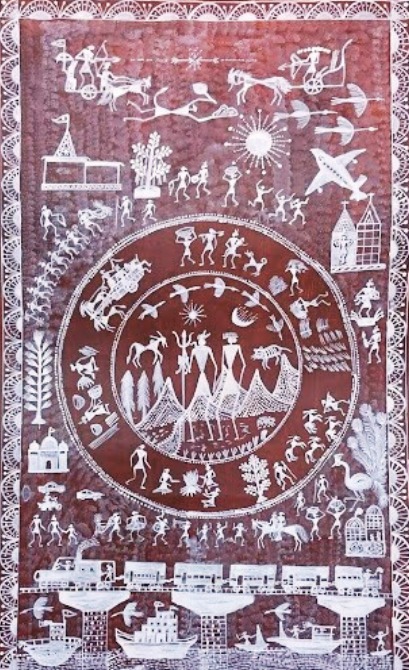
As the third largest tribe in India, the Santhals are famous for their unique tribal art. Their lives are deeply connected to nature, with daily work centered on farming, fishing, and hunting in the forests. In the evenings, they find joy in music and dance, which is why their paintings often show scenes of celebrations, harvests, and rituals using simple shapes and soft colors. These artworks are created by a special group called "magic painters" (Jadu Patuas), who believe their art has the power to protect crops, heal illnesses, and honor their ancestors.

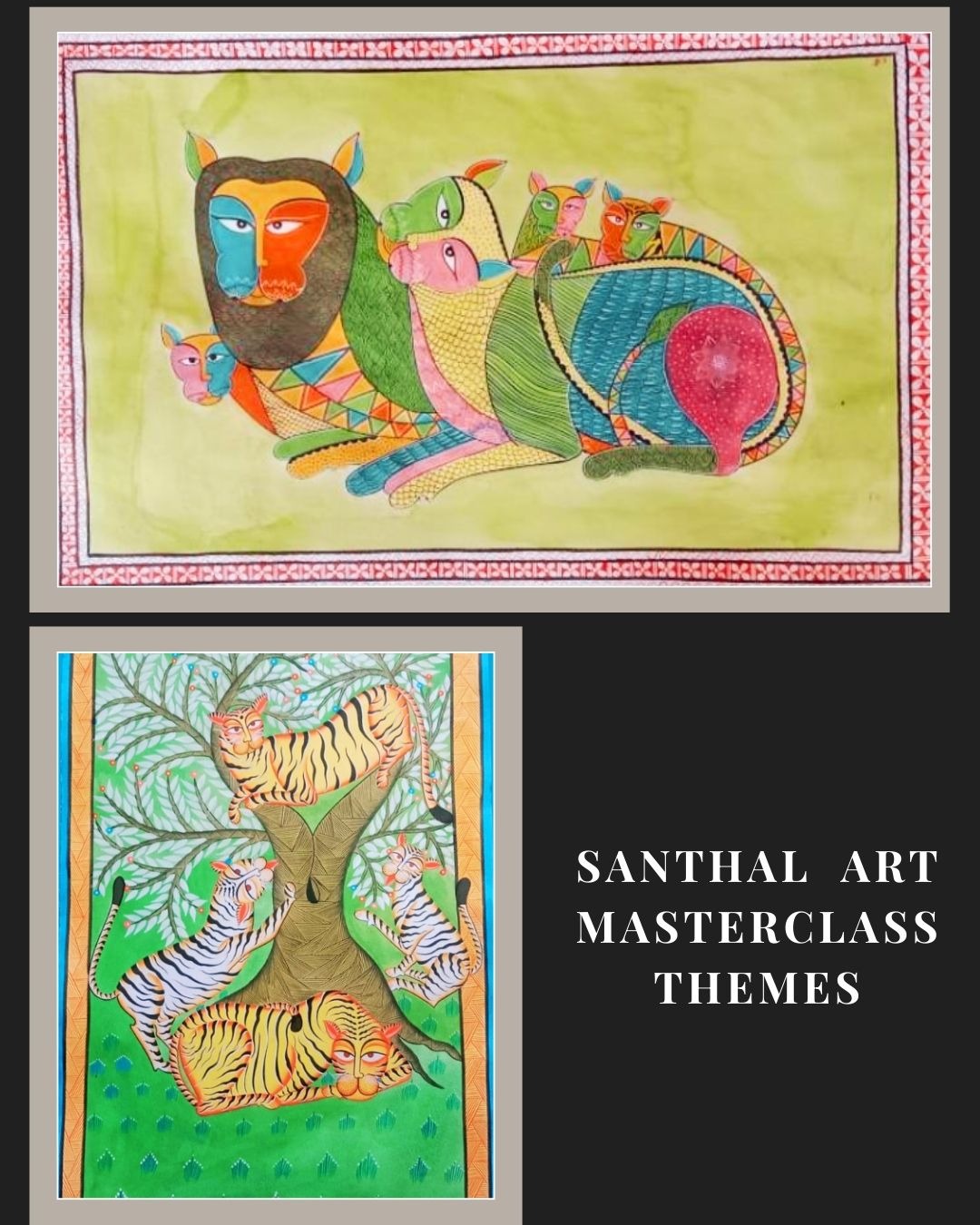
In this workshop, we will make a beautiful painting of "Sundarban sundari"  by Anwar Chitrakar  in Kalighat style with our native Kalighat& Santhal artist - Mr Samir Chitrakar. This painting is about Royal Bengal Tigers in Sunderban national park. Its the family of a tiger. Sunderi is also the name of a very famous tigress that was shifted from Kanha to Odisha to promote population of tigers in that part..  but she couldnt adjust to her new environment  and was killed as she turned maneater..

The Santhal patuas showed an interest in portraying domestic pets which might be an influence of Mughal as well as contemporary British artists. Several scenes of animals like cats etc., birds, prawns/lobstars, fishes like Rui, Shol etc. were the popular themes in Kalighat paintings.

Learning Objectives & Modules

  • Understand the significance of Royal Bengal Tigers and their family life in the Sunderban National Park through Santhal art.
  • Learn about conservation efforts by connecting the story of the tigress Sunderi and tiger relocation initiatives in India.
  • Explore the cultural style, symbolism, and storytelling techniques of Santhal painting.

Module Details:
Module 1:Making the Sketch
Module 2:Giving base color
Module 3:How to do outlining and background coloring
Module 4:Adding detailing with black
Module 5: Giving more detailing on the elements of the painting
Module 6: Completing the outlines and adding detailing and final touch-ups to the painting

Materials Needed

Materials required for this workshop are listed below: 
  • Paper/Canvas - A3 size
  • Pencils / Eraser / Sharpener
  • Black color Pen / Thin marker
  • Acrylic colors or Watercolors (Artist will use Natural Colors). Shades similar in acrylic set are:
    • Scarlet lake/ Cadmium Red
    • Sap Green
    • Prussian Blue
    • Permanent Blue Light
    • Titanium White
    • Burnt Sienna
    • Permanent Orange
  • Long Hair Brushes : 000, 1, 2, 3, 5, 7

About artist & his work

Kalighat and santhal paintings are also called Bangal Pattachitra. Pattachitra is a general term for traditional, cloth-based scroll painting based in the eastern Indian states of Odisha and West Bengal. It is a traditional and mythological heritage of West Bengal. The Bengal Patachitra is divided into some different aspects like Durga Pat, Chalchitra, Tribal Patachitra, Medinipur Patachitra, and Kalighat Patachitra. The subject matter of Bengal Patachitra is mostly mythological, religious stories, folk lore and social. The Kalighat Patachitra, the last tradition of Bengal Patachitra is developed by Jamini Roy. The artist of the Bengal Patachitra is called Patua. These paintings  are a component of an ancient Bengali narrative art, originally serving as a visual device during the performance of a song.

Bengal Patua artists carry the occupational surname of 'Chitrakar'. They are concentrated in the village of Naya in Medinipur district of West Bengal. So our native artist Samir Chitrakar is a Kalighat and santhal artist from Medinipur district of West Bengal. His mother is also famous Kalighat and Santhal artist.-https://www.catterfly.art/expert/samir-chitrakar-kalighat-santhal-art
Catterfly master artist Samir Chitrakar is from a tribal family in Midnapore, West Bengal. He is a generational Kalighat and Santhal artist and has conducted many art exhibitions.

Image Source and Disclaimers

Disclaimer for the art workshop: 
  • The artist will make the painting in the standard size, and it is recommended to use the same size. However, participants may choose other sizes as per their convenience and seek artist guidance in live sessions to manage the artwork in their chosen size of canvas.
  • Artist typically the brushes at their convenience as they have years of experience. Participants may choose the brush size as per their convenience and level of expertise, and seek artist guidance in the live sessions.
  • Artists use the sample image as a reference image for teaching purposes only. They typically provide their interpretation and variations to make a unique artwork. Sample image is not copied as it is and Catterfly provides the due credit to the original artist (wherever available) in our marketing communications. 

**The displayed image is a representational image from the net. Check our website to see the source and name of the original artist**

Contact to Learn More

E-Mail: info@catterfly.art
Phone: +916393897910
Duration

15 Hrs

Price

₹ 4000

Contact us about this Workshop

WhatsApp Us!
Relevant Blogs

While you're here, check these out too!

  • 0
  • 0

Cart

  • {{ item.documentId.name }}